

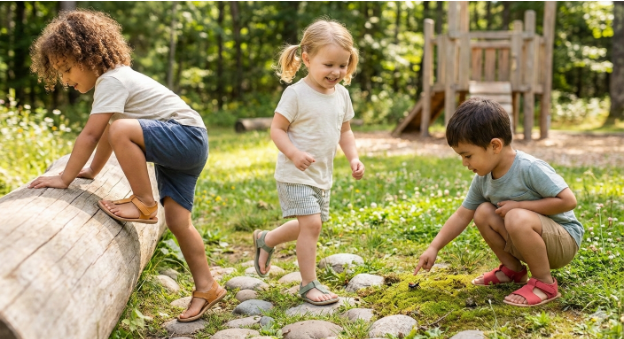
Soft Kids Barefoot Sandals for All Day Play
When the sun is out and the grass is green, kids want to run. They want to jump, climb trees, and chase their friends. As a parent, you want them to be safe. You also want them to be comfy. Most of the time, we reach for big, thick sneakers. We think more cushion is better. But did you know that big shoes can actually make it harder for kids to play?
That is where barefoot sandals come in. These are not just any shoes. They are special because they let a child’s foot act like it is totally bare. In this guide, we will talk about why soft sandals are the best pick for your little ones this year.
What Does “Barefoot” Really Mean?
You might think barefoot means wearing no shoes at all. While that is great for inside the house, kids need protection outside. Barefoot sandals are shoes that have very thin soles. They are flat from the front to the back. They also have a lot of room for toes to wiggle.
Imagine trying to play piano with thick winter gloves on. It would be hard, right? You couldn’t feel the keys. Your fingers wouldn’t move well. Thick, stiff shoes are like those gloves, but for feet. Soft sandals are more like thin, stretchy gloves. They protect the skin but let the feet move naturally.
Why Your Child’s Toes Need Space
Have you ever looked at a baby’s foot? Their toes spread out like a fan. This is how feet are supposed to look. Traditional shoes often have a pointy front. This squishes the toes together. Over time, this can change how a child walks. It can even make their feet weak.
Soft sandals have a wide “toe box.” This means the front of the shoe is wide. It gives the toes plenty of room to spread out. When toes can spread, a child has a better “base.” Think of it like a kickstand on a bike. A wider base means they won’t tip over as easily. This is very important when they are running fast on the playground.
Feeling the Ground is a Good Thing
The bottom of a child’s foot is full of nerves. These nerves send messages to the brain. They tell the brain if the ground is soft, hard, bumpy, or slippery. This helps the brain tell the body how to balance.
When a child wears shoes with a two-inch thick sole, they can’t feel anything. It is like walking on stilts. They might trip more often because their brain isn’t getting the right signals. By choosing kids barefoot sandals, you are helping your child connect with the ground. This makes them more confident when they climb rocks or walk on uneven trails.
The Problem with Heavy Shoes
Some kids’ shoes are very heavy. If you hold them in your hand, they feel like small bricks. For a little kid, lifting a heavy shoe over and over is tiring. It can make their legs ache.
Soft barefoot sandals are very light. Most of the time, kids forget they are even wearing them. This is perfect for all-day play. Whether they are at the park for an hour or at the zoo all day, light shoes keep them moving without getting tired.
How Healthy Feet Start with Good Choices
There are people who spend their whole lives studying how we move. One of the founders of Common Tread, Nicole, is an Occupational Therapist. She spent a lot of time watching how kids move. She noticed that regular shoes often got in the way of how her own boys played.
Her husband, John, is an Engineer. He knows how things are built. Together, they realized that kids needed something better. They wanted a shoe that was handmade and healthy. They wanted something that felt like being barefoot but kept feet safe from sharp sticks or hot pavement. This is why they started their small, family business. They wanted to help other parents find shoes that nurture healthy feet.
Building Strong Muscles Every Day
When a shoe is very stiff, the foot doesn’t have to do any work. The shoe does all the “holding.” This sounds good, but it actually makes the muscles in the foot lazy and weak.
A soft, flexible sandal forces the foot muscles to work. Every time your child steps over a root or jumps off a swing, their foot muscles are getting a workout. Strong feet lead to strong ankles and strong knees. It is like a gym for their feet while they are just having fun!
All-Day Comfort Means No Blisters
Nothing ruins a fun day faster than a blister. Stiff shoes often rub against the heel or the toes. Soft barefoot sandals are usually made from materials that move with the foot. They don’t fight against the foot. This means less rubbing and more smiling.
Because these sandals are breathable, feet stay cool. Sweaty feet in closed shoes can get itchy and uncomfortable. Open sandals let the air in, which is great for hot summer days.
Learning to Balance Early
Balance is a skill. Like reading or riding a bike, you have to practice it. Kids who wear flat, thin shoes often learn to balance faster. They can feel their center of gravity. They learn how to use their big toe to push off when they run.
Using kids barefoot sandals gives them the best chance to develop these skills early. It helps them become more athletic and less likely to get hurt as they grow up.
Simple Tips for Picking the Right Pair
When you are looking for the perfect sandal, keep these three things in mind:
- Can you bend it? You should be able to fold the shoe easily with one hand.
- Is it flat? The heel should not be higher than the toe.
- Is it wide? Make sure the front of the shoe doesn’t pinch the toes.
If a shoe passes these three tests, it is a great choice for your child’s health.
Conclusion: Letting Kids Be Kids
At the end of the day, childhood is about being free. It is about exploring the world and testing what your body can do. We shouldn’t let clunky, stiff footwear hold them back. Soft barefoot sandals are the perfect tool for adventure. They keep feet safe while letting them grow the way nature intended.
By choosing shoes that focus on health and movement, you are giving your child a great start. They will have stronger feet, better balance, and much more fun.