
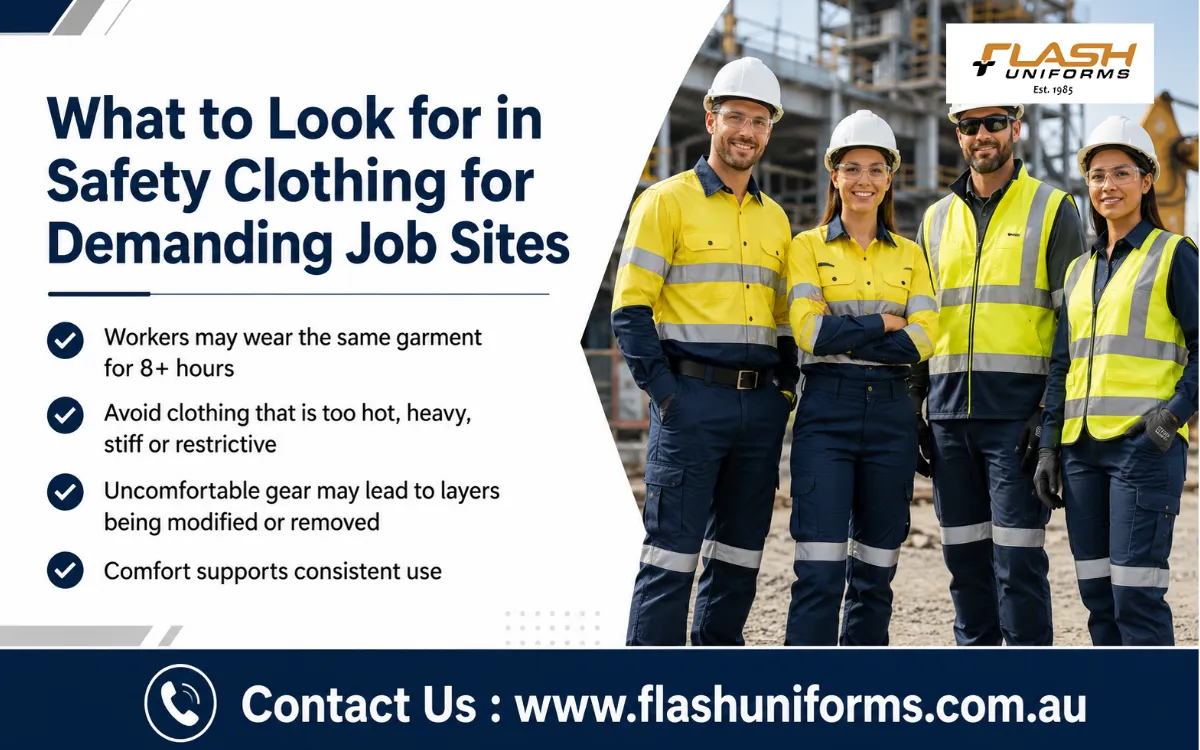
Safety-focused workplaces require clothing that can keep pace with demanding environments. Construction workers, tradespeople, logistics teams, road crews, maintenance professionals and outdoor employees may face changing weather, physical activity and situations where visibility is particularly important. Choosing appropriate high vis workwear therefore involves more than selecting the brightest garment available.
The most effective clothing strategy considers how, where and when employees work. Garments should support visibility while also being practical enough for employees to wear throughout their shift. Comfort, durability, movement and layering all deserve attention alongside workplace requirements.
Begin With the Actual Job
Different worksites present different challenges.
An employee working beside moving vehicles may have different requirements from someone working inside a warehouse. A road crew working at night may also need a different clothing system from a landscaping team working during daylight hours.
Before ordering garments, identify:
-
Typical work locations
-
Day or night working conditions
-
Weather exposure
-
Vehicle and machinery movement
-
Physical tasks employees perform
-
Seasonal temperature variations
-
Company safety policies
-
Relevant site requirements
Understanding these factors makes it easier to select suitable products instead of relying on general assumptions.
Visibility Should Be Appropriate to the Environment
High-visibility garments are designed to make employees easier to notice against their surroundings.
However, the appropriate garment can depend on when and where it is used.
Some workplaces require daytime visibility, while others may require garments incorporating reflective materials for lower-light conditions.
Businesses should assess their own workplace obligations and ensure garments selected for specific tasks meet applicable requirements.
Consider Colour and Contrast
Fluorescent colours can help workers stand out against common industrial, roadside and outdoor backgrounds.
Contrast panels may also provide practical advantages, including helping reduce the visual impact of dirt in areas where garments frequently become soiled.
The best choice should combine visibility needs with the realities of the job.
Comfort Should Not Be Treated as Optional
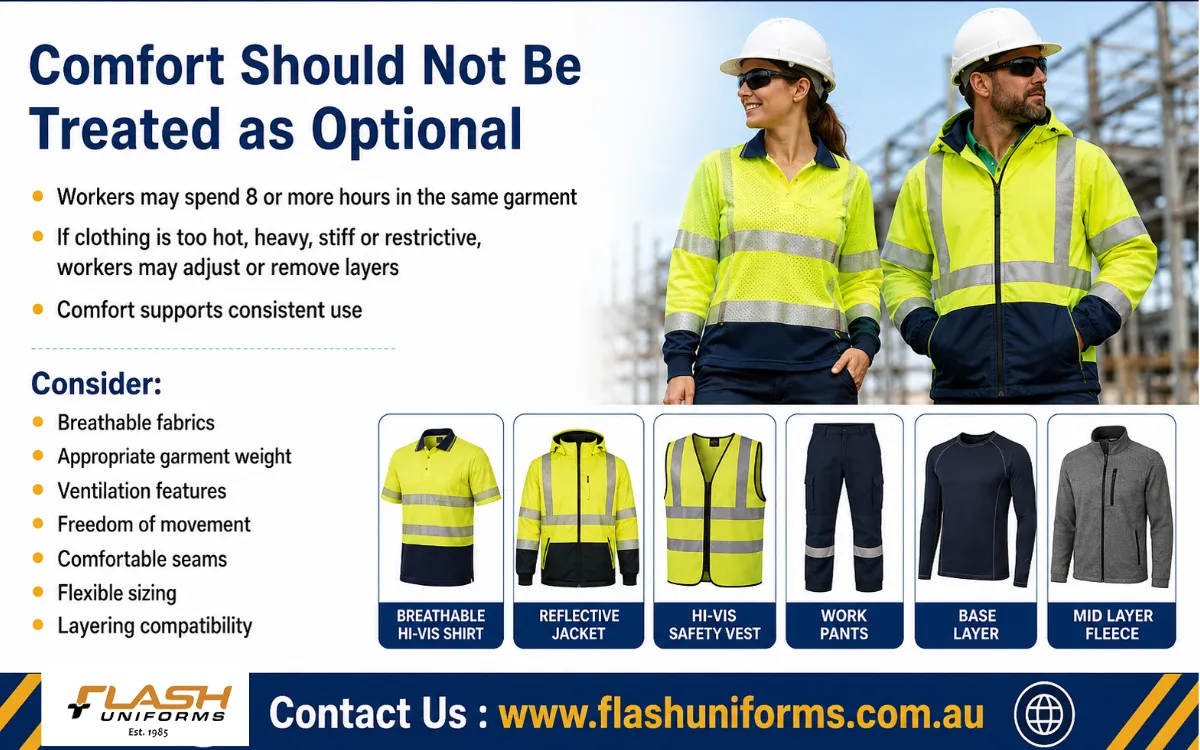
Workers may spend eight or more hours wearing the same garment.
If clothing is too hot, heavy, stiff or restrictive, employees may be tempted to modify how they wear it or remove layers when conditions become uncomfortable.
Comfort therefore supports consistent use.
Consider:
-
Breathable fabrics
-
Appropriate garment weight
-
Ventilation features
-
Freedom of movement
-
Comfortable seams
-
Flexible sizing
-
Layering compatibility
Employees performing strenuous physical work may particularly benefit from clothing designed to reduce unnecessary heat build-up.
Durability Is Important on Tough Sites
Demanding jobs can quickly expose weaknesses in ordinary garments.
Repeated bending, kneeling, lifting, climbing and contact with equipment can stress seams and fabric. Worksite clothing may also experience frequent washing.
Look closely at construction details such as reinforced stitching, strong closures and durable fabrics.
Employees who regularly carry tools may also need well-positioned pockets designed for practical use rather than appearance alone.
Explore Purpose-Built Workwear Ranges
Once the workplace requirements are clear, businesses can compare specialised ranges such as Syzmik Workwear to identify garments suited to trade and industrial environments.
A coordinated range can make it easier to source complementary shirts, pants, jackets and other layers while maintaining a consistent team appearance.
Useful Garment Categories
Depending on the workplace, a safety clothing program may include:
-
High-visibility polos
-
Work shirts
-
Taped shirts
-
Work trousers
-
Shorts
-
Jackets
-
Hoodies
-
Vests
-
Rainwear
-
Coveralls
Not every employee needs every garment. Allocate clothing according to their actual role and exposure.
Fit Can Affect Everyday Performance
Oversized clothing may become cumbersome around machinery or equipment, while garments that are too tight can restrict movement.
Sizing therefore deserves careful attention.
Employees should be able to reach, bend, kneel and lift without feeling excessively restricted.
Where teams include a wide range of body types, offering suitable sizing options may improve comfort and consistency.
Think About Pockets and Storage
Small functional details often become extremely important during real work.
Trade and site workers may carry phones, pens, measurement tools, keys and other equipment.
Useful features can include:
-
Chest pockets
-
Cargo pockets
-
Pen divisions
-
Phone storage
-
Tool pockets
-
Secure closures
However, more pockets are not automatically better. Storage should be positioned so it does not interfere with movement or create unnecessary bulk.
Develop a Layering System
Australian work environments can involve significant temperature changes between early morning, midday and evening.
Instead of relying on one heavy garment, consider creating a clothing system that can be layered.
Base Layer
A lightweight shirt or polo provides the everyday foundation.
Mid Layer
A jumper, fleece or hoodie can provide additional warmth.
Outer Layer
A suitable jacket or weather-resistant garment can help employees manage colder or wetter conditions.
The visibility characteristics of each layer should be considered, particularly because the outermost garment is what other people will see.
Don’t Forget Hot Weather
Safety clothing should be planned for summer as carefully as winter.
Hot conditions can make physical work more demanding.
Lightweight materials, ventilation and suitable sleeve options may help employees remain more comfortable while still following workplace requirements.
Businesses should also assess sun exposure and other environmental risks as part of their broader safety planning.
Branding Should Work With the Garment
Many organisations want employee clothing to display a company logo.
Branding can help identify contractors and crews, but placement should not compromise important garment features.
Logos should be positioned thoughtfully around reflective tape, pockets, seams and other functional areas.
A clean branding approach can maintain a professional appearance without cluttering the garment.
Create Clear Clothing Guidelines
Employees should understand which garments are expected for particular situations.
Guidelines might explain:
-
Approved garments
-
Required layers
-
Seasonal options
-
Replacement procedures
-
Care instructions
-
Branding standards
-
Site-specific requirements
Clear policies help reduce inconsistency across teams.
Inspect and Replace Worn Garments
Even durable clothing does not last forever.
Work garments should be checked regularly for excessive wear, damaged closures, fading and other deterioration.
Employees should have an easy way to report clothing that needs replacement.
A planned replacement system is usually more effective than waiting until garments become visibly unsuitable.
Why Choose Flash Uniforms?
Flash Uniforms provides Australian businesses with access to workwear and safety-focused apparel from a variety of recognised brands. This allows employers to compare garments across different job requirements while also considering company presentation and branding. Whether teams need everyday site clothing, visibility-focused options or complementary layers for seasonal conditions, Flash Uniforms offers a broad starting point for building a coordinated workplace wardrobe.
Final Thoughts
The best safety clothing program begins with the job—not the catalogue.
Businesses should assess working conditions, visibility needs, movement, weather, durability and employee comfort before selecting garments.
Purpose-built clothing that fits correctly and performs reliably is more likely to be worn consistently.
By combining appropriate visibility, practical design, seasonal layering and a clear replacement process, employers can create a clothing system that supports workers throughout demanding shifts while maintaining a professional and coordinated team appearance.