
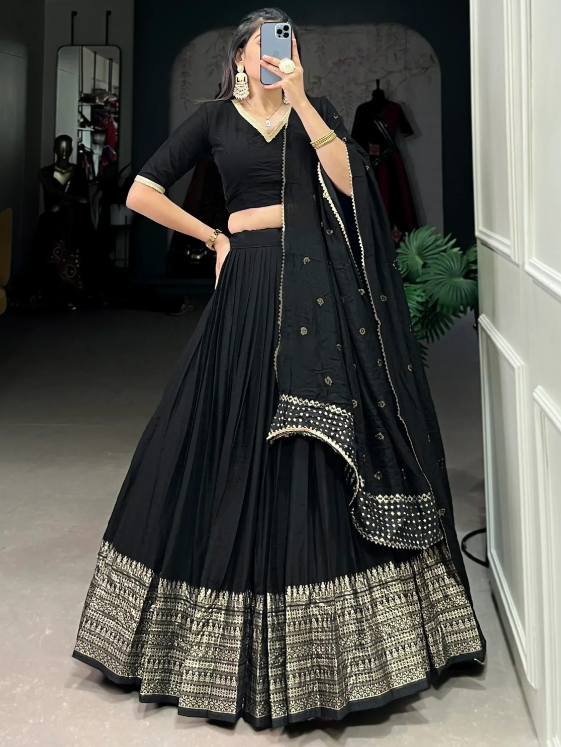
For decades, wedding fashion followed an unspoken rule: bright, auspicious colors belonged at celebrations, while darker shades stayed reserved for other occasions. That rule is quietly being rewritten with each passing wedding season, as more women look beyond the expected palette.
The black lehenga has moved from an occasional statement piece to a genuine favorite among women seeking elegance without following the expected script. Its appeal lies not in defiance of tradition, but in the sophistication it brings to festive dressing, reshaping how color choices are made for celebrations today.
Why Black Was Once Considered Unconventional for Celebrations
In many cultural traditions, black carried associations that made it an unusual choice for joyous occasions. Bright colors like red, gold, and pink were long seen as symbols of celebration and good fortune, passed down through generations as the expected wedding palette for brides and guests alike.
Black, by contrast, was often linked to mourning or formality, keeping it largely absent from bridal wardrobes for generations. These associations have gradually softened as fashion sensibilities evolve alongside changing social attitudes toward personal expression, individuality, and confidence in celebration dressing.
The Growing Appeal of Bold, Non-Traditional Choices
Modern brides and guests alike are increasingly comfortable stepping outside conventional color expectations at weddings and festive events. Confidence and personal expression now often outweigh strict adherence to traditional symbolism, especially among younger generations planning their own celebrations and choosing outfits that reflect who they are.
This shift has opened the door for shades once considered unsuitable for festive wear to be reimagined as elegant, powerful alternatives to the expected palette, giving women far more creative freedom when building their celebration wardrobe.
Why the Black Lehenga Choli Works So Well for Modern Celebrations
A well-crafted black lehenga choli offers something few other colors can: dramatic contrast paired with effortless sophistication. Against gold embroidery, silver detailing, or colorful embellishments, black creates a striking visual balance that few other shades in a festive wardrobe can genuinely replicate with the same impact.
This contrast allows intricate handwork to stand out more prominently than against a busier, saturated base fabric, giving embellishment room to breathe while keeping the overall silhouette elegant, refined, and memorable at any evening function.
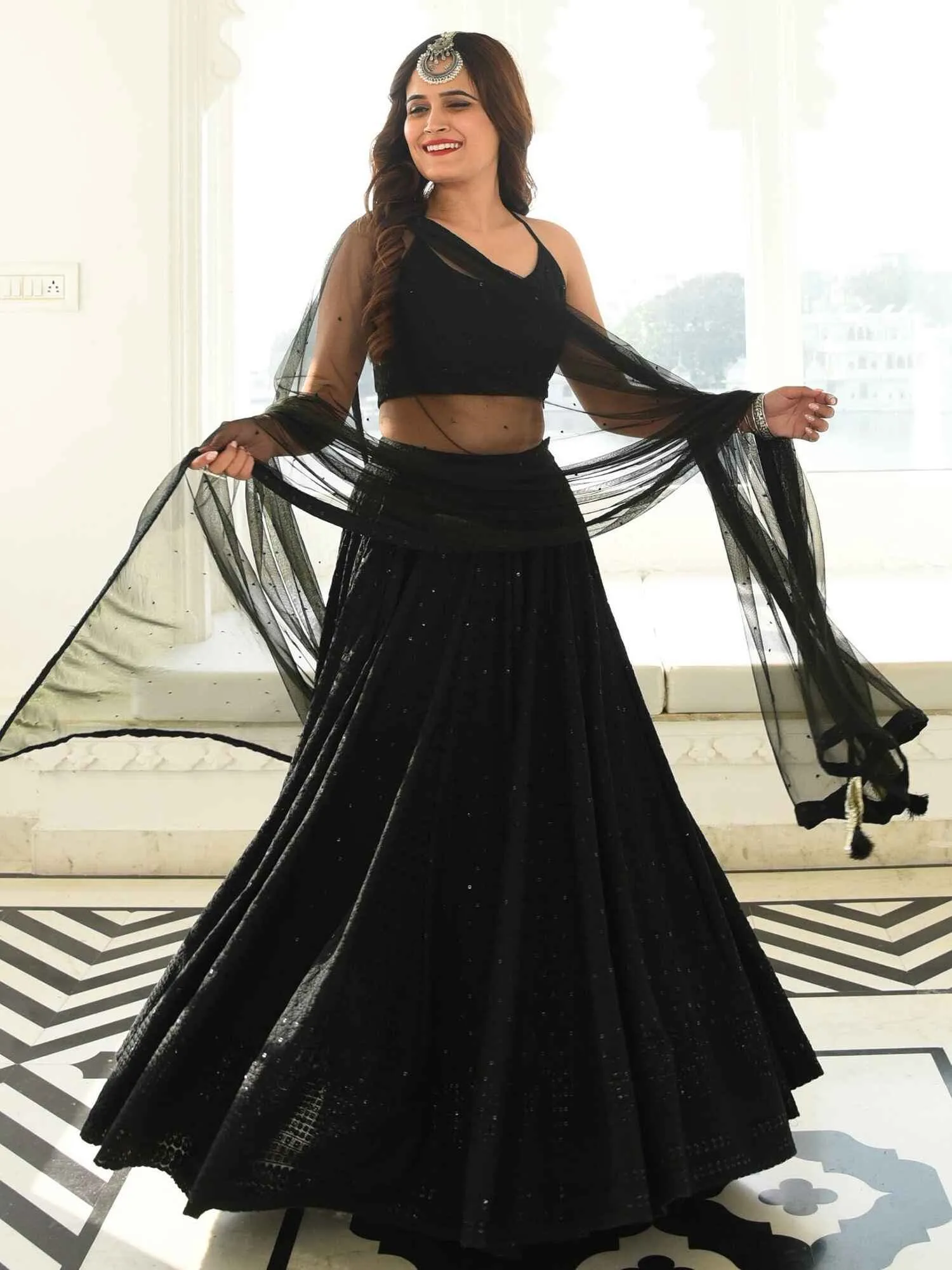
What Makes Black a Versatile Choice Across Occasions
Unlike many traditional bridal colors tied closely to specific rituals, black offers unusual flexibility across different types of celebrations, making it a practical addition to any festive wardrobe rather than a color set aside for a single occasion.
Black lehengas work well for:
-
Sangeet and pre-wedding functions
-
Evening receptions and cocktail events
-
Festive parties and family celebrations
-
Cultural festivals like Diwali or Durga Puja celebrations
This versatility means the outfit rarely sits unused in a wardrobe, unlike pieces reserved strictly for one specific ceremony or ritual moment.
How Styling Elevates the Impact of a Black Lehenga
The way a black lehenga is styled plays a significant role in its overall impression. Statement jewelry, particularly in gold or silver tones, stands out beautifully against a black base, creating a look that feels carefully curated rather than accidental or thrown together at the last minute.
Makeup and hairstyling choices often shift toward bolder tones when paired with black outfits, since the fabric provides a striking backdrop rather than competing with embellishments for attention throughout the evening.
Choosing the Right Fabric for a Black Lehenga
Choosing the right fabric matters just as much as color when working with black. Heavier fabrics hold structure well and suit elaborate embroidery, while lighter weaves offer better movement and comfort for long celebrations that stretch across an entire evening of dancing and photographs.
Common choices for a black lehenga include:
-
Velvet or silk for structured, formal drapes
-
Georgette or chiffon for lighter, flowing silhouettes
-
Net or tulle for a dramatic, layered flare
-
Satin or crepe for a sleek, contemporary drape
Matching fabric weight to the occasion ensures the outfit performs as beautifully as it photographs.
Balancing Boldness With Cultural Sensitivity
While black has gained popularity, many women still thoughtfully consider context before choosing it, particularly for core wedding rituals where traditional colors hold deeper cultural significance to family and community, and where expectations around color remain more firmly rooted.
This balance reflects a broader trend in modern ethnic fashion: embracing bold choices while remaining respectful of cultural meaning where it matters most to those celebrating alongside the bride or guest wearing it.
Final Thoughts
The rise of the black lehenga signals a meaningful shift in wedding fashion, one where personal confidence increasingly shapes color choices alongside tradition and family expectation, rather than being dictated entirely by convention or habit.
A black lehenga choli, thoughtfully embroidered and styled, offers a striking alternative to conventional bridal colors without losing elegance. As more women embrace this shift, black continues proving that a fixed palette no longer defines celebration fashion, but rather confidence and craftsmanship.